


VSI Sand Maker Configuration For Tuff Sand Production Line
Tuff is a porous volcanic rock characterized by moderate hardness but exceptionally high mud and moisture content. This engineering guide details the optimal VSI sand maker configuration for a tuff sand production line. Written by a senior process engineer, the article explains why treating desliming, crushing, and shaping as an integrated system is mandatory. It details a highly successful six-stage wet processing circuit—featuring Liming Heavy Industry’s C6X Jaw Crushers, HST Cone Crushers, and VSI6X Sand Makers—to eliminate screen blinding and strictly control stone powder content.
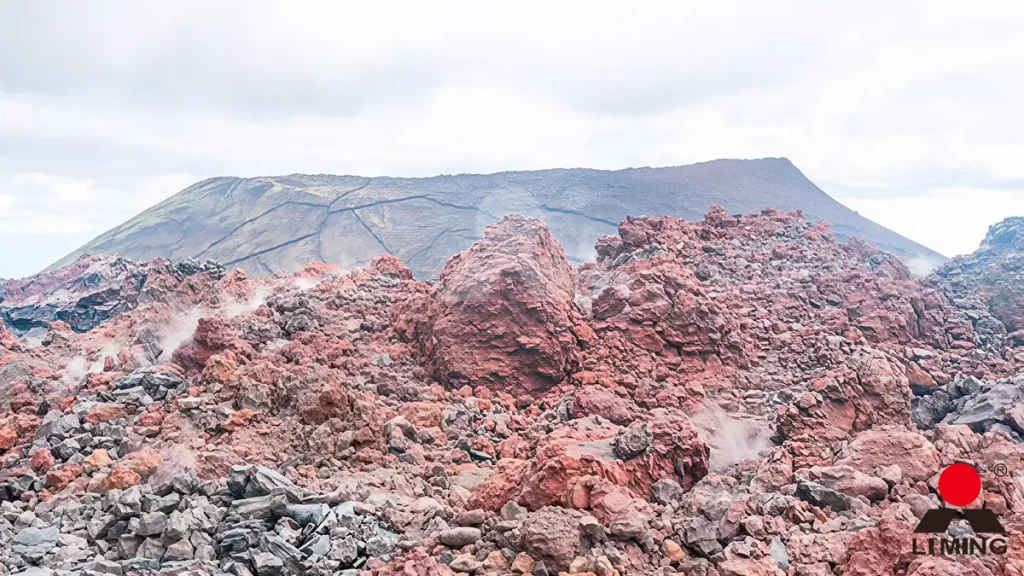
Tuff is a naturally occurring volcanic pyroclastic rock. While it possesses relatively soft to moderate compressive strength, it features incredibly high porosity and heavily fluctuating mud and moisture content. When processing this material, the sand-making circuit is highly susceptible to critical operational failures, including choked crushing cavities, blinded vibrating screen meshes, and unacceptably high stone powder content in the finished manufactured sand.
Engineering a highly efficient tuff sand production line requires viewing mud removal, primary crushing, sand shaping, screening, and washing (or dry powder classification) as one synchronized, integrated system, rather than simply dropping a standalone sand maker onto the site. Based on successful high-capacity aggregate projects delivered by Liming Heavy Industry, we will break down the precise equipment selection logic for medium and large-scale tuff sand production lines.
I. Tuff Material Characteristics and Crushing Challenges
Tuff presents unique metallurgical challenges. Once the raw ore enters the crushers, the inherent clay and moisture easily adhere to the internal walls of the crushing cavities, the mantles of the cone crushers, and the mesh of the vibrating screens. This adhesion drastically lowers the total volumetric throughput and triggers massive, uncontrolled recirculating loads within the closed circuit.
Furthermore, if the material is sent directly from the secondary crushers into a Vertical Shaft Impactor (VSI) without a dedicated pre-desliming stage, the resulting manufactured sand will suffer from severe micro-fines contamination. The stone powder content (particles smaller than 0.075mm) will rapidly exceed the standard 15% to 20% control limit. Because commercial concrete batching plants and dry-mix mortar facilities are highly sensitive to stone powder, integrating a dedicated sand washing or air classification circuit is strictly mandatory. The core engineering objective for processing tuff is not “can it be crushed,” but rather “can it be crushed stably, can the mud be removed, and can the powder be controlled.”
II. Typical Configuration for Tuff Sand Production Lines (The Six-Stage Approach)
A mature, large-scale commercial tuff sand production line is typically engineered across six distinct operational stages. Here is the recommended configuration utilizing advanced machinery from Liming Heavy Industry:
- Pre-Screening and Feeding: The F5X Series Heavy-Duty Vibrating Feeder is installed to transfer material while simultaneously executing pre-screening, allowing mud and fine dirt to drop out before entering the primary crusher.
- Primary Coarse Crushing: The C6X Series Jaw Crusher (capable of accepting boulders up to 1200mm) takes the initial shock load, breaking massive raw volcanic rocks down to below 150mm.
- Secondary Medium and Fine Crushing: A strategic combination of HST Single-Cylinder Cone Crushers and HPT Multi-Cylinder Cone Crushers. In massive 1200 TPH operations, pairing single-cylinder units for bulk capacity and multi-cylinder units to ensure perfect lamination crushing provides the optimal balance of throughput and reduced wear costs.
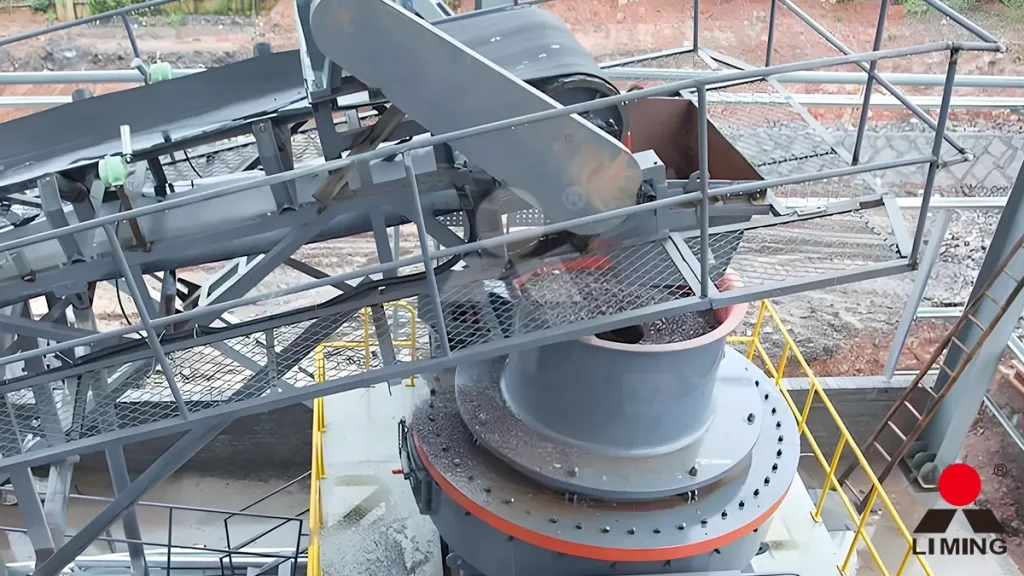
- Sand Making and Shaping: The VSI6X Series Sand Maker (Vertical Shaft Impactor) serves as the core shaping unit. Utilizing high-velocity “rock-on-rock” or “rock-on-anvil” collisions, it finalizes the fine crushing and ensures the aggregate particle shape is perfectly cubic.
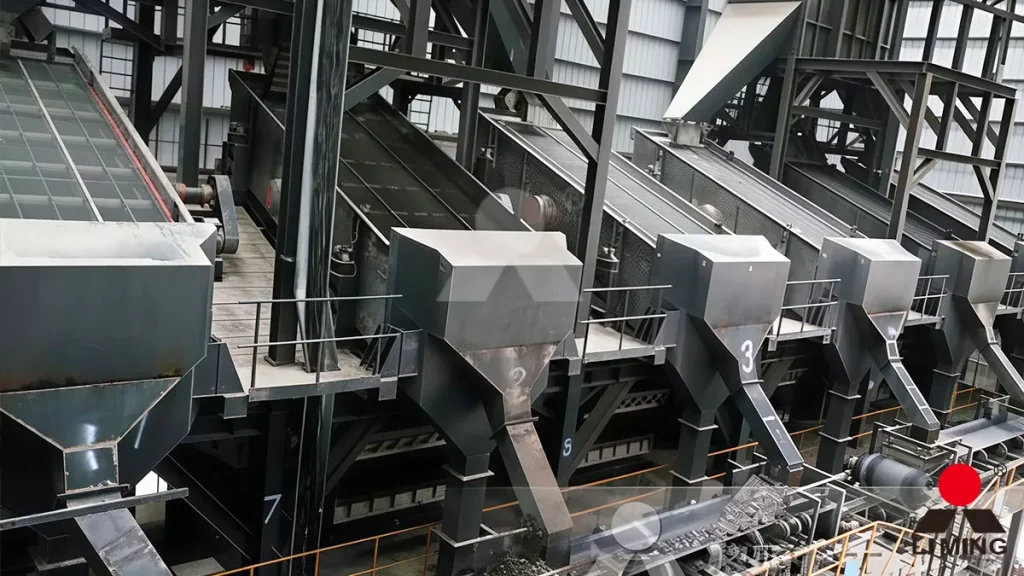
- Screening and Classification: Multiple S5X Series Vibrating Screens execute precision multi-deck classification, separating the flow into strict commercial fractions (such as 0-4mm sand, 4-7mm, 7-12mm, 12-22mm, and 22-28mm gravel).
- Washing and Powder Recovery: If deploying a wet process, an XSD Series Wheel Sand Washer paired with a fine sand recovery unit and dewatering screen ensures the final sand is spotless. If deploying a dry process, a high-efficiency powder separator combined with a pulse-jet baghouse dust collector is utilized.
By outputting multiple distinct commercial specifications, the aggregate plant captures different segments of the construction market, maximizing overall revenue.
III. Wet Process vs. Dry Process: Dictated by the Final Application
Selecting whether to utilize water in the process is a major engineering decision based on capital budget, environmental regulations, and the raw material’s inherent moisture.
- Wet Process Technology: This requires a higher initial capital investment due to the integration of sand washers and complex wastewater treatment facilities. However, the finished manufactured sand is exceptionally clean, the stone powder content is strictly controlled, and the product boasts incredibly high acceptance rates at commercial concrete batching plants. When the raw tuff ore contains high levels of mud, the wet process is the mandatory choice; otherwise, attempting dry screening will result in catastrophic, continuous screen blinding.
- Dry Process Technology: This approach requires lower initial capital and completely eliminates the wastewater treatment cycle. It is highly suitable for arid regions lacking water resources or for dedicated dry-mix mortar production lines that demand a specific level of retained stone powder. However, this process strictly requires aggressive frontend mud removal and the integration of highly efficient air classifiers in the middle stages.
Liming Heavy Industry has successfully commissioned massive 1000 TPH and 1300 TPH tuff production lines across various regions. The decision to pursue a wet or dry route is never a blind copy-and-paste of a previous blueprint. It is determined exclusively by laboratory analysis of the raw material (evaluating mud content, moisture, silica levels, and abrasion index), local aggregate selling prices, and regional environmental compliance laws.
IV. Economic Optimization of Sand Making Configurations
The ultimate key to configuring a tuff sand making plant lies in balancing the initial capital investment with long-term operating expenses. Although the wet process introduces additional costs for washing and water treatment, the exceptional cleanliness of the finished sand commands a premium market price, consistently delivering a vastly superior return on investment over the long term.
Conversely, the dry process offers simplicity and lower entry costs, making it suitable for applications where strict stone powder limits are not enforced. Whether you require a jaw crusher, a massive gyratory crusher, a hydraulic cone crusher, or a high-velocity impactor, the preliminary raw material testing and process design must never be overlooked. These early engineering stages directly determine the correct equipment selection and the exact discharge opening settings, ensuring your plant achieves maximum profitability. Contact the engineering team at Liming Heavy Industry today to design a fully customized crushing flowsheet tailored exactly to your deposit.
