


Difference Between Screening And Classification And Screening Types
In mineral processing, understanding the fundamental difference between screening and classification is critical for plant efficiency. This engineering guide explains that screening relies on physical aperture sizes for coarse materials (>0.25mm), while classification depends on settling velocities for ultra-fine slurries (<0.2mm). It further details the six core industrial screening applications—including Independent, Auxiliary (Pre-screening and Closed-Circuit), Preparatory, Selective, Dewatering, and Desliming screening—highlighting how advanced equipment like Liming Heavy Industry’s S5X and SL series maximize throughput and lower operating expenses.
In the field of mineral processing and aggregate production, particle separation is the absolute foundation of quality control and energy efficiency. However, even experienced plant operators frequently confuse the concepts of screening and classification. While both processes aim to separate a mixed feed of materials into specific size fractions, their underlying physical principles and operational environments are fundamentally different.
As a senior process engineer, I define the distinction simply: Screening relies strictly on the physical aperture size of a screen deck to divide particle fractions, and it is universally deployed for processing coarse materials generally larger than 0.25 millimeters. Conversely, Classification relies on the difference in particle settling velocities within a fluid medium (typically water or air). It is strictly utilized to separate ultra-fine particles, usually those smaller than 0.2 millimeters, operating deep within the wet grinding circuit.
While fine screening technology has advanced to process smaller particles efficiently, the heavy lifting of industrial separation is still categorized by its specific operational purpose. Based on the metallurgical objective, industrial screening operations are engineered into six distinct categories.
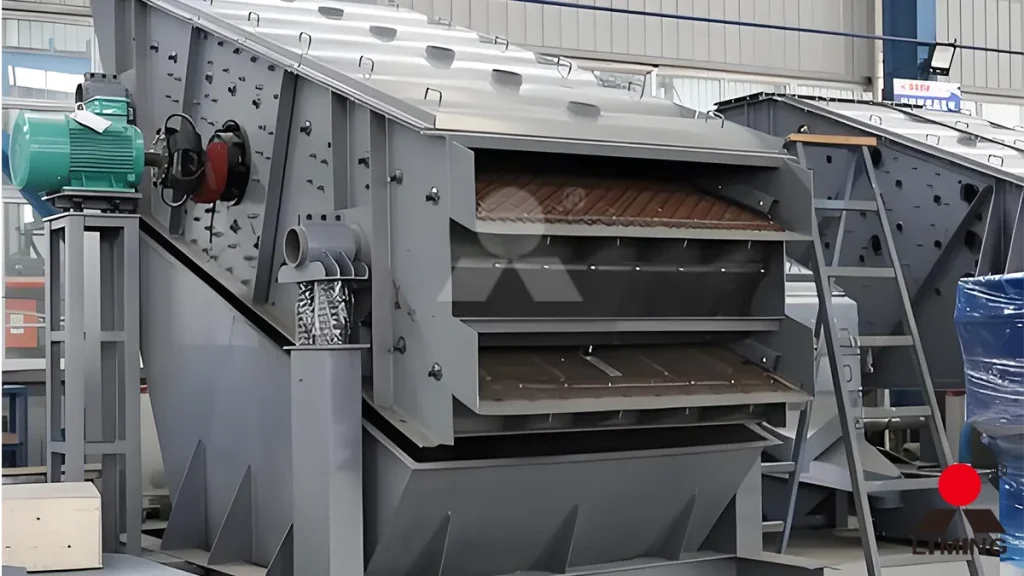
The Six Core Types of Industrial Screening Operations
1. Independent Screening
The sole objective of independent screening is to produce a final, commercial-grade product that directly meets the buyer’s specifications. For example, in the ferrous metallurgy industry, run-of-mine rich iron ore is frequently screened into strict size fractions. The high-grade, coarse lump ore is sent directly into the blast furnace for smelting, while the fine ore powder must be sent to sintering or pelletizing plants before it can be utilized.
2. Auxiliary Screening
This type of screening acts as a mechanical support system within the crushing circuit of a mineral processing plant. Its purpose is to optimize the workload of the heavy crushers. Auxiliary screening is divided into two distinct engineering configurations: Pre-screening and Closed-Circuit Checking Screening.
Pre-screening occurs immediately before a crusher. Utilizing heavy-duty grizzly bars or vibrating screens, the system extracts fine particles and dirt that are already smaller than the crusher’s discharge setting. By bypassing these fines, you dramatically reduce the volumetric load entering the crusher chamber, preventing packing, lowering electrical power consumption, and increasing the machine’s total throughput capacity.
Closed-Circuit Checking Screening occurs immediately after the crushing stage. Its engineering objective is to strictly guarantee that the crushed product meets the exact particle size requirements for the downstream grinding mills. Any oversized material that fails to pass through the screen is automatically returned to the crushers via a recirculating conveyor. This creates a closed crushing loop, highly similar to how a hydrocyclone operates in a closed grinding circuit with a ball mill, ensuring absolute size control and maximizing overall comminution efficiency.
3. Preparatory Screening
The objective here is to prepare the material for a highly specific downstream separation process. For instance, in a gravity separation plant, the raw material must be strictly divided into narrow, uniform size fractions before it can enter the jigging machines. Feeding a mixed size range into a jig will severely disrupt the settling dynamics and destroy the recovery rate.
4. Selective Screening
If the valuable mineral components within an ore body are distributed unevenly across different particle sizes, screening can be used as a direct beneficiation tool. By utilizing a high-frequency screen, operators can separate the ore based on size, intentionally discarding the low-quality size fractions and retaining the high-quality fractions. This process physically upgrades the total grade of the ore. For example, in specific iron concentrate regrinding circuits, selective fine screening acts as a highly cost-effective method to elevate the final iron concentrate grade.
5. Dewatering Screening
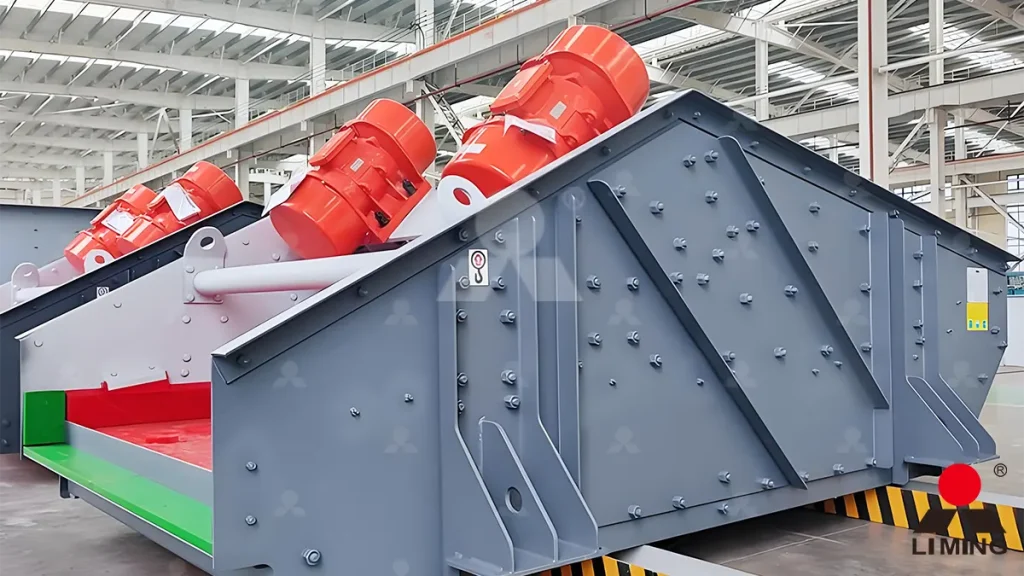
As the name implies, the exclusive purpose of this screening operation is solid-liquid separation. It utilizes specialized equipment, such as the SL Series Linear Vibrating Screen from Liming Heavy Industry. Operating on an upward incline with intense linear vibration, the machine forces process water to drain through fine slotted polyurethane panels, discharging a dry, stackable solid filter cake.
6. Desliming Screening
This process is dedicated to washing and removing ultra-fine clay, mud, and unwanted slimes from the valuable coarse material. It is a critical preparatory step for highly weathered ores, ensuring that sticky mud does not blind downstream screens, choke crusher cavities, or consume excessive chemical reagents during the froth flotation process.
Conclusion
Whether you require the massive, high-acceleration sizing power of the S5X Series Vibrating Screen to maintain a closed crushing loop, or the precise solid-liquid separation capabilities of a linear dewatering screen, selecting the correct screening technology is paramount. Understanding the fundamental differences between screening and classification ensures that process engineers can design highly efficient flowsheets, maximize product recovery, and significantly lower the daily operating expenses of the processing plant.

