


Hematite Beneficiation Process Flow And Combined Separation Methods
Hematite is a weakly magnetic iron ore that requires highly complex metallurgical processes to reach commercial concentrate grades. This engineering guide details the three mainstream hematite beneficiation process flows: Continuous Grinding, Stage-Grinding with Gravity-Magnetic-Flotation, and Stage-Grinding with Magnetic-Gravity-Flotation. Written by a senior process engineer, the article explains how utilizing advanced heavy machinery—such as Liming Heavy Industry’s C6X Jaw Crushers and Overflow Ball Mills—ensures precise mineral liberation. It explores how combining pre-desliming magnetic separation with anionic reverse flotation drastically lowers operating expenses and maximizes iron recovery.
Unlike magnetite, hematite is a weakly magnetic iron ore. Because it does not respond to standard low-intensity magnetic fields, processing it into a high-grade commercial concentrate requires highly complex metallurgical circuits. Modern hematite beneficiation relies on the synergistic integration of froth flotation, high-intensity magnetic separation, and gravity concentration.
As a senior process engineer, I can attest that the absolute foundation of any of these circuits is precise mineral liberation. Before any separation can occur, the raw ore must be violently crushed by heavy-duty primary equipment, such as the C6X Series Jaw Crusher from Liming Heavy Industry, followed by secondary reduction in a hydraulic cone crusher, and finally pulverized inside an Overflow Ball Mill. Once the ore is properly ground, metallurgical engineers generally deploy one of three mainstream beneficiation process flows, depending on the exact grain size and mineralogy of the deposit.
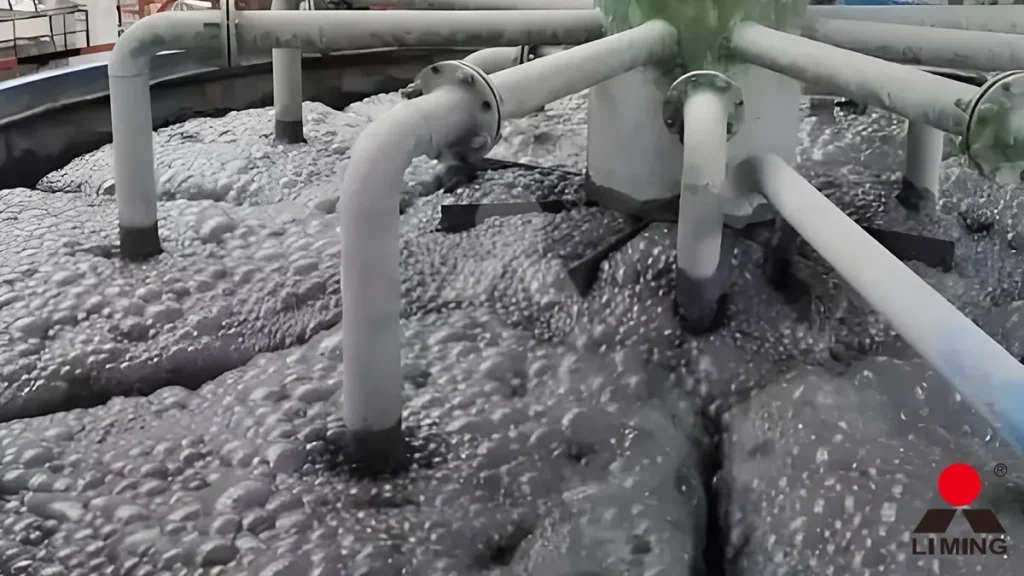
1. Continuous Grinding → LIMS → HIMS → Anionic Reverse Flotation
This process is the industry standard for ores characterized by extremely fine disseminated grain sizes. The raw ore is continuously ground in a single, prolonged milling circuit until almost all the hematite crystals achieve complete monomeric liberation from the silica gangue.
Core Engineering Advantages:
- Exceptional Mineralogical Adaptability: By continuously grinding the entire ore volume to a fine powder, this circuit ensures that even the most microscopic, deeply embedded hematite particles are physically exposed for separation.
- Optimal Flowsheet Synergy: Following the grinding stage, the slurry passes through Low-Intensity Magnetic Separation (LIMS) and High-Intensity Magnetic Separation (HIMS). These magnetic stages act as critical pre-treatment steps. They forcefully strip away primary and secondary mud (slimes) and reject massive amounts of barren tailings early. This significantly elevates the iron grade entering the subsequent flotation cells. More importantly, eliminating the slimes creates the perfect physicochemical environment for the anionic reverse flotation process to operate without chemical interference.
- Superior Metallurgical Indices: Currently, HIMS equipment is the most effective technology for early tailings rejection in hematite, while anionic reverse flotation remains the absolute ideal method for capturing high-purity iron concentrate. Combining them guarantees exceptional recovery rates.
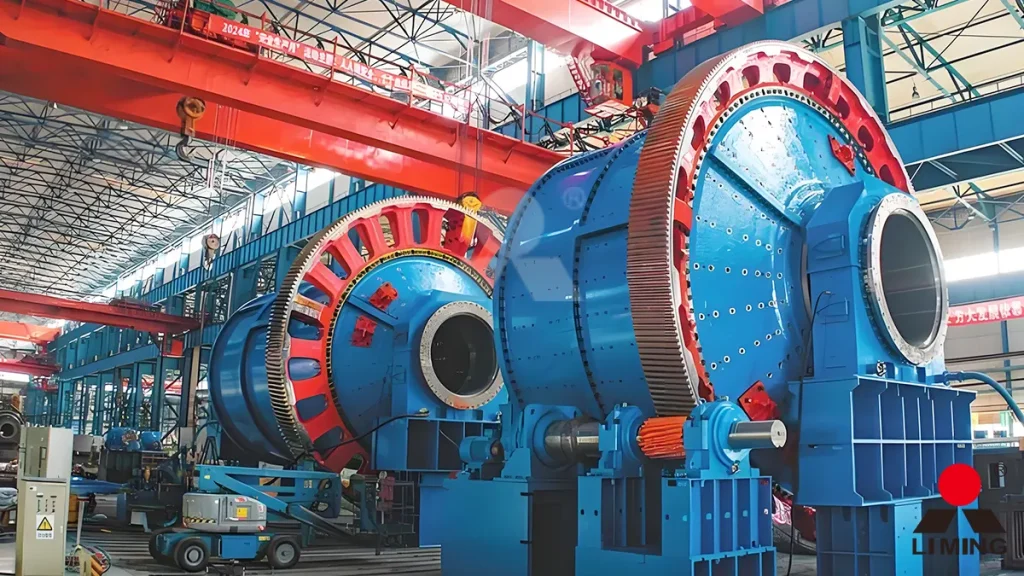
2. Stage-Grinding → Coarse/Fine Classification → Gravity → Magnetic → Anionic Reverse Flotation
This flowsheet abandons continuous grinding in favor of a “stage-grinding” approach. After the primary grinding stage, the slurry is immediately pumped into a hydrocyclone for classification. The coarse fraction and the fine fraction are then sent to completely different separation circuits.
The coarse fraction is routed to spiral chutes (Gravity Separation) to immediately recover a high-grade coarse concentrate. The fine fraction is sent through a “LIMS → HIMS → Anionic Reverse Flotation” circuit. Any middle-grade material (middlings) from the gravity circuit is sent to a secondary ball mill for regrinding and looped back into the hydrocyclone.
Core Engineering Advantages:
- Reduced Energy Consumption: By classifying and extracting the coarse, liberated iron early, this flowsheet dramatically reduces the volumetric load sent to the secondary grinding mills, slashing electrical power costs. Furthermore, capturing a coarse concentrate makes the final vacuum filtration and dewatering process significantly easier than dealing purely with ultra-fine alkaline flotation froth.
- Highly Targeted Separation: Mineral liberation occurs randomly during grinding. If a large crystal is liberated early, it should be extracted immediately. This flow uses highly efficient gravity separation for the coarse, liberated particles, reserving the complex and expensive magnetic-flotation circuit strictly for the stubborn, fine-grained material.
- Narrow-Fraction Separation: The floatability of a mineral depends heavily on its specific surface area. By ensuring that the flotation cells only receive particles of a strictly uniform, narrow size range, engineers can prevent the chemical chaos that occurs when attempting to float coarse boulders and microscopic dust simultaneously. This drastically improves the chemical efficiency of the flotation circuit.
3. Stage-Grinding → Coarse/Fine Classification → Magnetic → Gravity → Anionic Reverse Flotation
This process is very similar to the second flowsheet but flips the order of the separation stages. After the initial grinding and classification, the material undergoes intense magnetic separation before gravity separation is applied.
Core Engineering Advantages:
- Maximized Stage-Grinding Efficiency: Like the previous flow, utilizing stage-grinding prevents over-pulverization and reduces the tonnage requiring secondary milling.
- Aggressive Early Tailings Rejection: The massive advantage of this specific flowsheet is that HIMS is placed at the very front of the line to aggressively discard tailings. Typically, the HIMS circuit immediately rejects over 45% of the total ore volume as barren waste. This massive reduction means the downstream gravity and flotation circuits can be physically smaller, saving the plant owners millions in initial capital expenditure on equipment.
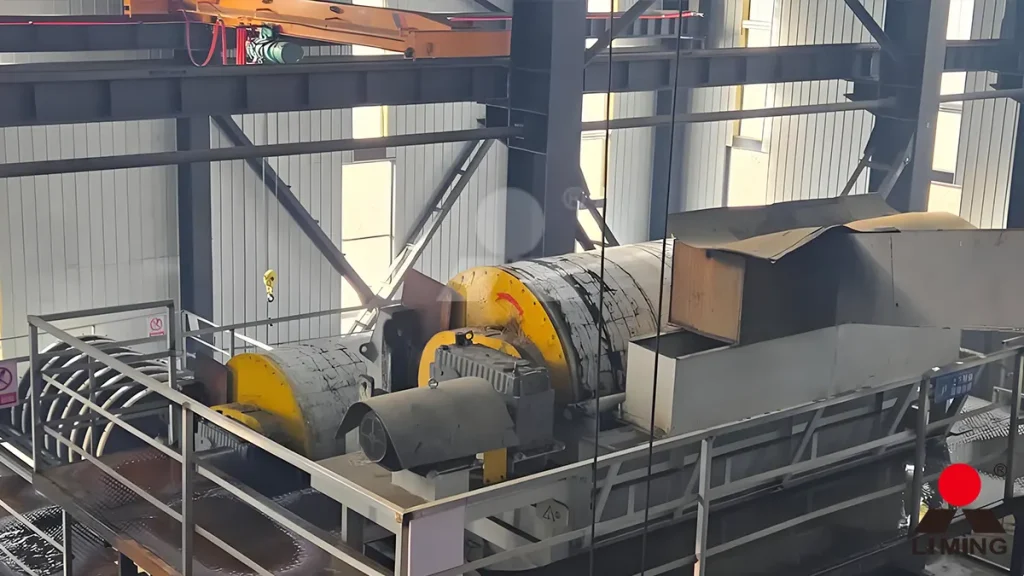
Proven Industrial Performance and Results
These complex flowsheets are not merely theoretical; they represent the absolute cutting edge of commercial iron ore extraction. For example, a major concentrator deployed the “Stage-Grinding → Coarse/Fine Classification → Gravity-Magnetic-Flotation” combined flow to process a raw ore with a dismal head grade of 28.55%. The plant successfully achieved a final concentrate grade of 67.56% with a remarkable overall iron recovery rate of 78.92%.
Another facility utilizing the “Continuous Grinding → LIMS → HIMS → Reverse Flotation” circuit processed raw ore at 32.67% Fe, ultimately producing a premium concentrate grade of 64.39% with a recovery rate of 74.35%.
Conclusion and Equipment Integration
Processing weakly magnetic hematite into a premium commercial concentrate requires an uncompromising integration of robust mechanical comminution and highly sensitive physicochemical separation. By deploying heavy-duty crushing and grinding machinery from Liming Heavy Industry, plant operators guarantee that the initial mineral liberation is exact, preventing the generation of unrecoverable slimes.
Whether your deposit requires a continuous grinding circuit or an aggressively staged magnetic-flotation combined flowsheet, matching the mechanical equipment perfectly to your unique mineralogy is the only way to maximize iron recovery, lower daily operating expenses, and ensure the long-term profitability of your mining enterprise.

