


Cobblestone Sand Making Production Line Equipment Configuration
Cobblestones and river pebbles are prime raw materials for manufactured sand, yet their extreme silica hardness demands specialized comminution equipment. This engineering guide explores a mature cobblestone sand making production line equipment configuration. Written by a senior process engineer, the article details a six-stage circuit—utilizing Liming Heavy Industry’s PEW Jaw Crushers, HST Cone Crushers, and VSI6X Sand Makers—to balance high sand yield with strictly controlled operating expenses, ensuring finished aggregates meet rigorous commercial concrete standards.
Cobblestones, naturally formed river pebbles, are an ideal raw material for the production of high-grade manufactured sand. However, because they are composed primarily of silicates with a high quartz content, they exhibit exceptional compressive strength and severe abrasiveness. This extreme physical nature imposes demanding requirements on the comminution capacity and particle shape control of your processing plant.
How can plant owners select a rational equipment combination that guarantees a high sand-making yield while strictly minimizing daily operating expenses? As a senior process engineer at Liming Heavy Industry, I will draw upon real-world project conditions to outline a mature, battle-tested production line configuration strategy.
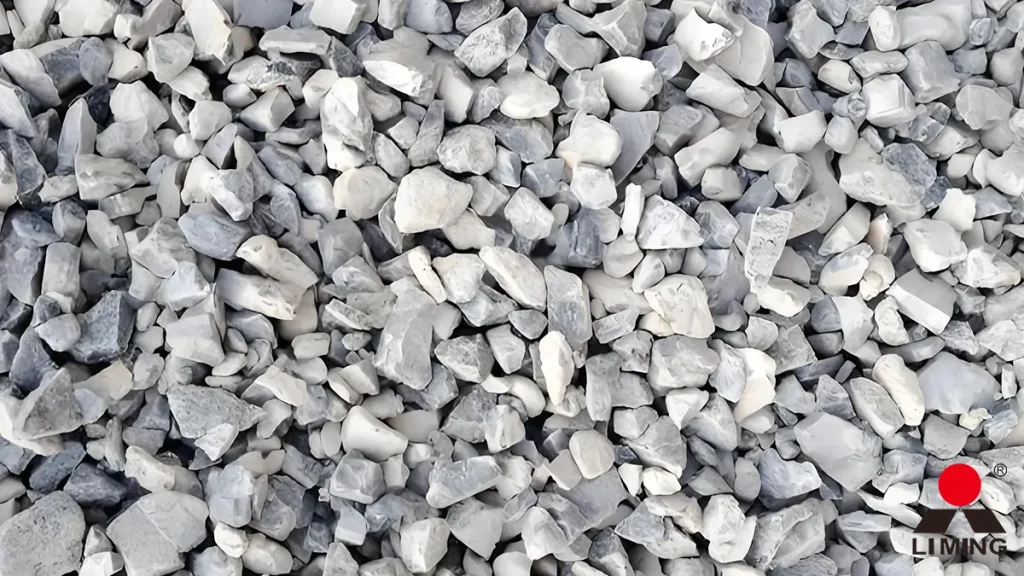
I. The Typical Process Flow of Cobblestone Sand Production
Cobblestone sand making generally adheres to the classic metallurgical principle of “more crushing, less grinding.” A mature, highly efficient production flowsheet is systematically organized into six sequential stages: Feeding, Primary Coarse Crushing, Secondary Medium/Fine Crushing, Tertiary Sand Making, Screening, and Washing.
- Feeding Stage: Raw cobblestones are uniformly transferred from the raw material hopper into the primary crusher via an F5X Series Heavy-Duty Vibrating Feeder, which utilizes grizzly bars to pre-screen natural dirt and fine debris.
- Primary Crushing: The heavy-duty PEW Series European Jaw Crusher shatters large raw boulders down to an intermediate size below 150 millimeters.
- Secondary Crushing: The coarsely crushed material is conveyed into a hydraulic cone crusher for medium and fine reduction, bringing the stone down to small gravel sizes suitable for sand making.
- Sand Making and Shaping: The gravel enters a vertical shaft impactor, which utilizes high-velocity kinetic energy to crush and shape the material into fine sand.
- Classification: An S5X Series Vibrating Screen precisely separates the stream into commercial sand fractions and coarse gravel. Any oversized material that fails to meet the specification is automatically returned to the sand maker for reprocessing, forming a strict closed-circuit loop.
- Washing Stage: The qualified fine sand enters an XSD Series Wheel Sand Washer to remove residual silt and excessive stone powder, producing high-purity commercial concrete sand.
This entire flowsheet is compact, highly automated, and ensures smooth mechanical transitions between every operational stage.
II. Core Equipment Selection for Hard Cobblestones
Within a cobblestone sand making production line, the Hydraulic Cone Crusher and the Vertical Shaft Impactor (VSI) represent the two absolute core machines that dictate plant profitability.
1. Secondary Reduction: Hydraulic Cone Crusher
The cone crusher is responsible for reducing the cobblestones to a small, uniform gravel size (typically under 30 millimeters), preparing the ideal feed for the sand maker. For abrasive cobblestones, horizontal impact crushers must be strictly avoided; their chrome blow bars will be destroyed within days. Instead, we deploy the HST Series Single-Cylinder Hydraulic Cone Crusher or HPT Series Multi-Cylinder Hydraulic Cone Crusher from Liming Heavy Industry.
Operating on the lamination crushing principle, the rocks are forced to squeeze against one another inside the cavity. This rock-on-rock compression drastically lowers the wear rate of the manganese mantles and bowl liners, ensuring long-term mechanical stability and keeping consumable costs to an absolute minimum.
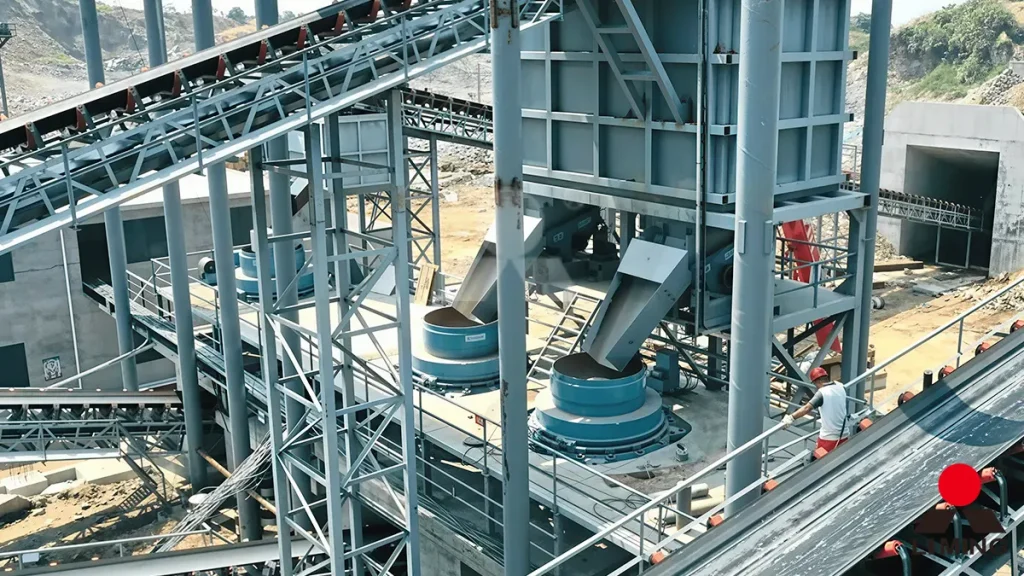
2. Tertiary Sand Making: Vertical Shaft Impactor
The VSI6X Series Sand Maker is the specialized shaping machine that actually produces the 0-5 millimeter sand. Utilizing an optimized four-opening rotor, the machine accelerates the pebbles to extreme velocities, launching them into the crushing chamber where they collide violently in a “rock-on-rock” or “rock-on-anvil” mode.
This high-speed collision shatters the pebbles along their natural cleavage planes, knocking off sharp edges and producing finished sand with an exceptional cubic shape, continuous gradation, and minimal flat or elongated (needle-like) particles. Furthermore, the rock-on-rock configuration allows the wear parts to wear evenly, significantly extending their replacement intervals.
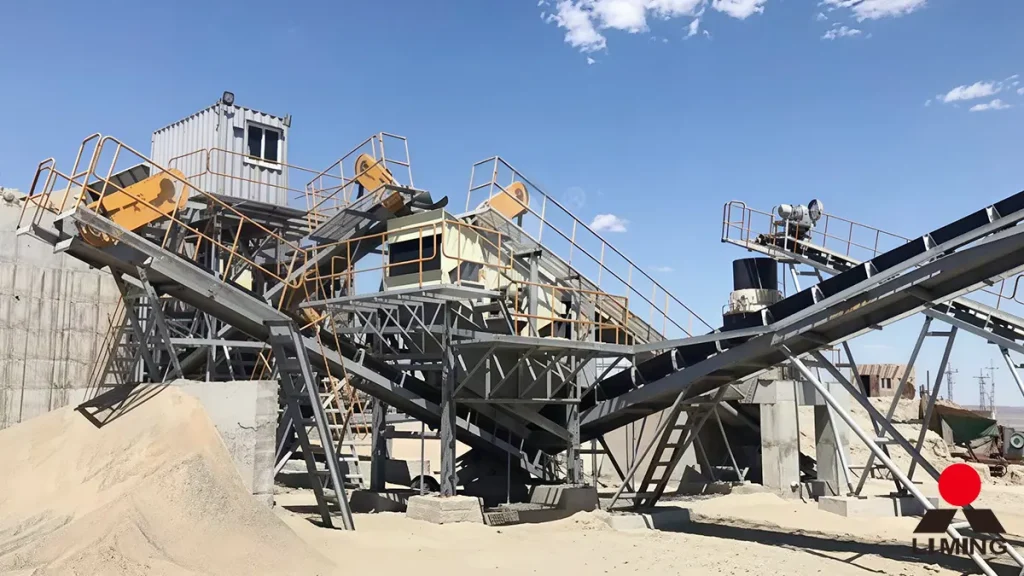
III. Investment Cost and Capacity Matching Recommendations
Engineering an aggregate production line requires carefully balancing your capital investment budget against your target capacity goals. A 200 ton per hour production line and an 800 ton per hour mega-plant feature vast differences in equipment dimensions, power ratings, and circuit layouts.
Liming Heavy Industry strongly recommends that clients clearly lock in three core operational parameters during the initial planning phase:
- Raw Material Hardness and Silica Content: Dictates whether single-cylinder or multi-cylinder cone crushers are required, and determines the wear part replacement schedule.
- Maximum Feed Size: Dictates the physical dimensions and feed opening specifications of the primary jaw crusher.
- Target Hourly Capacity: Dictates the sizing of the entire mechanical fleet, ensuring that intermediate equipment does not create bottlenecks.
Once these three parameters are defined, our engineering team can rapidly generate an exact equipment manifest, electrical load calculations, and a customized process flowsheet. This prevents unnecessary capital expenditure on over-sized machinery while guaranteeing that the plant achieves its rated throughput.
Conclusion and Turnkey Engineering Solutions
Processing abrasive cobblestones into high-grade manufactured sand is an engineering challenge that requires respecting the physical metallurgy of the rock. Relying on compressive lamination in the cone crusher and high-velocity kinetic shaping in the VSI sand maker is the only proven method to achieve high sand yields while keeping operating expenses strictly controlled.
Liming Heavy Industry delivers comprehensive turnkey Engineering, Procurement, and Construction (EPC) services. From initial laboratory rock analysis and 3D plant layout design, to heavy machinery manufacturing, on-site installation, operational debugging, and operator training, we provide a complete, one-stop solution. Contact our engineering team today to design a high-efficiency, highly profitable cobblestone sand making plant tailored specifically to your project requirements.

