


Construction Solid Waste Recycling Production Line Equipment Selection Guide
Converting urban demolition rubble into commercial recycled aggregate requires specialized comminution circuits designed to handle mixed steel rebar, wood, and brick. Written by a senior engineer at Liming Heavy Industry, this guide details construction solid waste recycling production line equipment selection. It explores the complete flowsheet utilizing PE Jaw Crushers, HPT Cone Crushers with sensitive tramp iron protection, and VSI6X Sand Makers, illustrating how integrated process design lowers operating expenses.
How should an aggregate producer configure a construction and demolition solid waste recycling production line? In this technical guide, we will dismantle the equipment configuration logic across three core operational stages—crushing, screening, and sand making—backed by two real-world industrial case studies to help clarify your selection strategy and avoid expensive engineering pitfalls.
Historically, the overall utilization rate of construction waste has remained low, with the vast majority of discarded brick and concrete rubble still dumped into landfills. However, a properly engineered construction solid waste recycling production line transforms this urban “trash” into high-value recycled aggregates sold directly to the building materials market. The fundamental engineering question is: how exactly must the machinery be configured?
I. The Process Flow: Far More Complex Than Just Smashing Rock
Construction waste is fundamentally different from natural quarry rock. It arrives mixed with twisted steel rebar, wood scraps, and plastic sheeting, creating an erratic, chaotic feed composition. A complete construction solid waste recycling production line typically executes a multi-stage sequence: Feeding and Pre-Screening → Magnetic Iron Extraction → Primary Crushing → Secondary Crushing → Screening → Sand Making. Every single machine selection along this chain must align strictly with the raw feed’s physical traits.
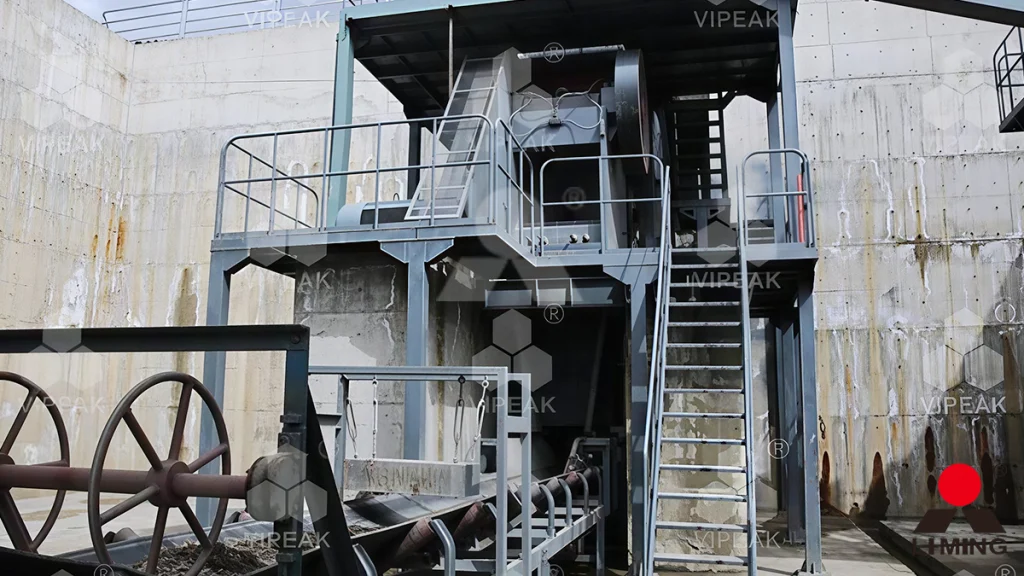
The primary coarse crushing stage universally utilizes a heavy-duty jaw crusher to break down massive concrete slabs and bricks (up to 800 millimeters) into chunks roughly 100 millimeters in size. Next, the secondary crushing stage relies on a hydraulic cone crusher to reduce the rubble below 40 millimeters. If high-quality manufactured sand is desired, a tertiary sand-making stage is added downstream. Screening runs throughout the entire process: qualified fractions exit to stockpiles, while oversized material returns to the crushers. This closed-circuit loop directly dictates the final particle shape and the total plant capacity.
Crucially, there is an auxiliary stage frequently neglected by novice investors: dust collection and wastewater treatment. Dry production lines generate immense airborne dust and strictly require pulse-jet baghouse dust collectors. Conversely, wet-processing circuits demand a closed-loop water recycling system. On a dedicated recycling project in Sichuan, deploying high-pressure plate-and-frame filter presses allowed the facility to continuously clarify and recycle wash water, achieving zero industrial wastewater discharge.
II. Equipment Selection: Material Dictates the Model, Capacity Dictates the Size
When sizing machinery, engineers strictly avoid two mistakes: oversizing equipment (which wastes capital expenditure on unused motors) and undersizing equipment (which causes catastrophic capacity bottlenecks). In the primary coarse stage, the jaw crusher is standard. The PE Series and C6X Series Jaw Crushers from Liming Heavy Industry feature massive feed openings, allowing them to easily swallow mixed blocks of concrete and brick.
For the secondary reduction stage, selection relies on material hardness. Because mixed demolition waste is generally softer than virgin granite, spring cone crushers or multi-cylinder hydraulic cone crushers work exceptionally well. Specifically, the HPT Series Multi-Cylinder Hydraulic Cone Crusher is heavily favored in solid waste projects. Why? Because it offers effortless hydraulic discharge adjustments and, most importantly, highly sensitive hydraulic tramp iron protection—an absolute lifesaver considering that un-extracted steel rebar inevitably sneaks into the crushing chamber.
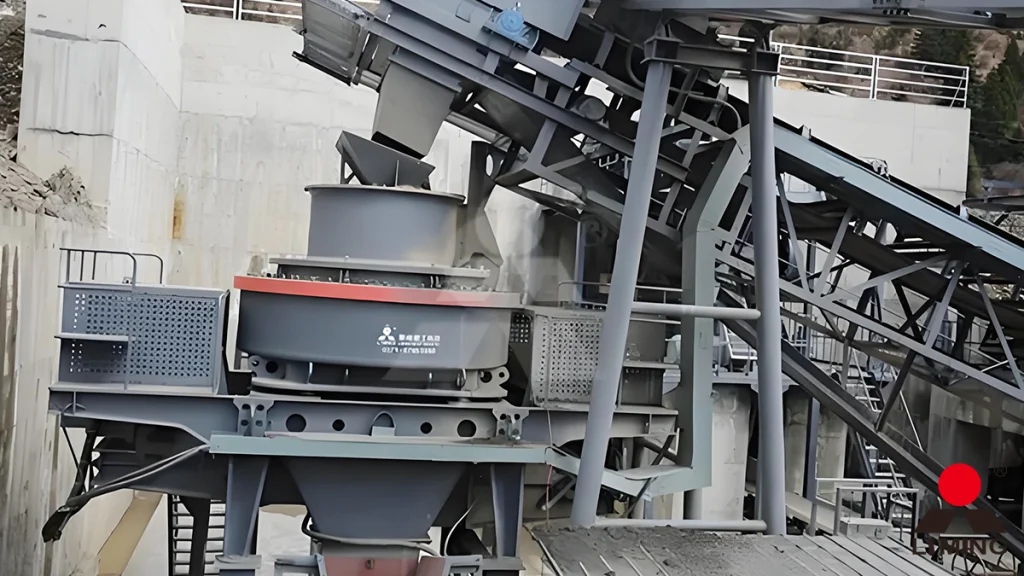
In the field of construction waste recycling, the final sand-making stage directly dictates the commercial value of your product. The VSI6X Series Sand Maker (Vertical Shaft Impactor) from Liming Heavy Industry is engineered to handle recycled aggregates, running stably across numerous commercial plants. Utilizing high-velocity collision mechanics, the finished manufactured sand exhibits an exceptional cubic shape and continuous gradation, matching the structural quality of natural river sand and fully satisfying the strict specifications for highway water-stabilized base layers. Backed by patented rotor designs, the machine excels in controlling electrical power draw and minimizing wear part consumption, continuously lowering long-term daily operating expenses for plant owners.
III. Engineering Execution in Real-World Projects
Consider how these configurations translate into commercial reality across two major projects:
1. The Jinyun Comprehensive Solid Waste Utilization Project
Secured in April 2025 for nearly 20 million RMB, this project processes a chaotic mix of sub-800mm rock, construction site spoil, and river dredging silt waste. The facility guarantees a continuous processing capacity exceeding 450 tons per hour, utilizing an advanced wet-processing circuit to output three commercial aggregate grades: 0-6mm, 6-12mm, and 12-30mm. The project was delivered as a complete turnkey engineering solution from initial flowsheet drafting to final commissioning.
2. The Hangzhou Construction Solid Waste Crushing Line
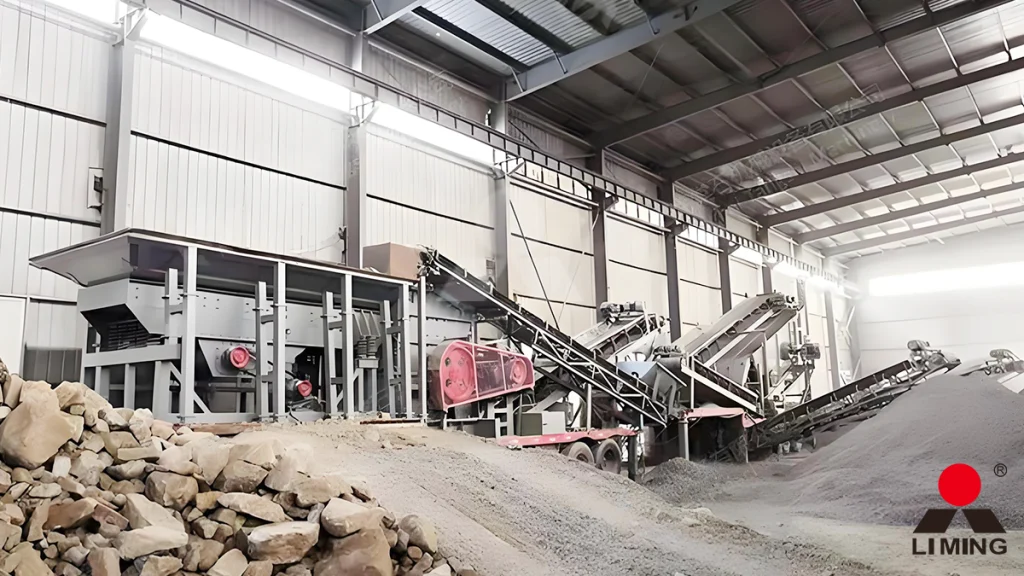
Another benchmark Engineering, Procurement, and Construction (EPC) showcase is the Hangzhou solid waste processing facility. In April 2026, when industry delegations from the Shandong Sand and Gravel Association toured the plant, they praised the facility as a “luxury hotel-style solid waste aggregate processing base.” Elevating a demolition waste plant to that immaculate industrial standard does not happen simply by buying a single strong machine; it is achieved purely through world-class whole-line configuration and rigorous process design.
IV. Conclusion
While municipal environmental policies and surging construction market demand are actively driving solid waste recycling forward, actual commercial success on the ground relies entirely on precise equipment configuration and sound process engineering. Selecting mismatched machinery leads, at best, to crippling capacity shortfalls, and at worst, to tearing down the entire facility and starting over. Partner with the engineering team at Liming Heavy Industry to test your raw material profiles and design a customized recycling production line engineered for maximum mechanical reliability and long-term profitability.

