


200 TPH Hard Rock Basalt Crushing Plant in Philippines
With the rapid development of infrastructure in the Philippines (roads, bridges, and airports), the demand for high-quality aggregate is skyrocketing. While river pebbles are becoming scarce, Basalt remains an abundant resource in regions like Rizal, Cebu, and Davao. However, crushing basalt presents a specific challenge: it is extremely hard (Mohs 7-8) and abrasive.
At Liming Heavy Industry, we specialize in hard rock solutions. This case study details how we helped a client in the Philippines conquer basalt processing with a customized 200 TPH Basalt Crushing Plant that minimizes wear costs and maximizes output.
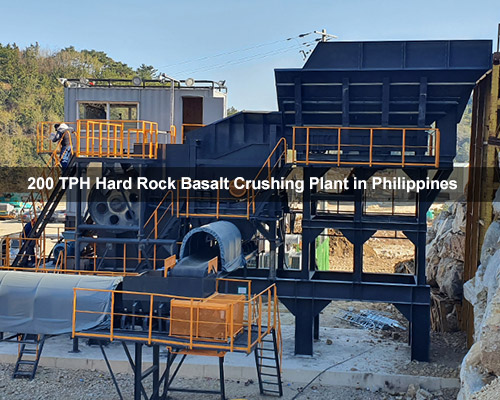
Project Background: The Hard Rock Challenge
Location: Rizal Province, Philippines
Raw Material: River Basalt and Mountain Basalt
The Problem: The customer initially used a traditional Impact Crusher (PF Series) as the secondary crusher. Due to the high silica content of the basalt, the blow bars were wearing out every 3-4 days, leading to massive downtime and skyrocketing maintenance costs.
The Solution: Switching to Hydraulic Cone Crushing
After analyzing the material samples, Liming Heavy Industry’s engineers redesigned the process flow. We replaced the impact crusher with our advanced HPT Series Multi-cylinder Hydraulic Cone Crusher.
Key Equipment Configuration:
- Primary Crushing: PE Series Jaw Crusher (PE750×1060) – Handles large boulders up to 630mm.
- Secondary Crushing: HPT300 Hydraulic Cone Crusher – The core of the line. It uses the “lamination crushing” principle (rock-on-rock) to crush stones, significantly reducing liner wear compared to impactors.
- Screening: 4YZS2160 Vibrating Screen – Separates the output into 0-5mm, 5-10mm, 10-20mm, and 20-38mm.
Technical Data: 200TPH Basalt Crushing Line
Below is the detailed configuration of this successful project in the Philippines.
| Parameter | Project Details |
|---|---|
| Project Location | Rizal, Philippines |
| Capacity | 200 – 250 Tons Per Hour (TPH) |
| Max Feed Size | < 630mm |
| Output Sizes | G1 (20-40mm), 3/4″ (10-20mm), S1 (5-10mm), Sand (0-5mm) |
| Main Equipment | Vibrating Feeder GZD1100×4200, PE750×1060 Jaw Crusher, HPT300 Cone Crusher, 4YZS2160 Screen |
| Daily Operation | 10-12 Hours |
Client Feedback
“We were losing money on spare parts with our old setup. Liming’s proposal to use the HPT Cone Crusher changed everything. Our wear liner life increased by 300%, and the shape of the aggregate is excellent—cubical and clean. Liming’s local support team in Manila also helped us with installation and training.”
— Mr. Tan, Quarry Owner, Rizal
Liming Engineer’s Advice for Philippines Quarry Owners
Stop using Impact Crushers for Basalt!
Many customers in the Philippines choose Impact Crushers because they are cheaper upfront. However, for abrasive rocks like Basalt or Granite, the operating cost (OpEx) will destroy your profit margins. For rocks harder than Mohs 6, always invest in a Cone Crusher (HST or HPT series). The initial cost is higher, but the ROI is much faster due to low maintenance.”
Frequently Asked Questions (FAQ)
1. Do you have a service center in the Philippines?
Yes, Liming Heavy Industry has a dedicated office and local service team in the Philippines to provide fast spare parts delivery, on-site installation, and maintenance services.
2. How much does a 200TPH basalt crushing plant cost?
The price depends on the specific configuration (e.g., whether you need a washing system or a generator). Generally, a complete stationary line ranges from $200,000 to $450,000. Contact us for a detailed breakdown.
3. Can this plant also process river pebbles?
Absolutely. The PE Jaw + HPT Cone configuration is versatile and perfect for river pebbles, granite, and diabase. It ensures high-quality sand and gravel production.
4. How much power is required for this plant?
For the 200TPH configuration listed above, the total installed power is approximately 450-500 kW. We can assist you in selecting the right diesel generator set if grid power is unstable.
Start Your Project with Liming Heavy Industry
Don’t let abrasive basalt eat into your profits. Choose a crushing plant designed for durability and efficiency.

