


How to Choose the Right Secondary Crusher: Cone vs Impact
The secondary crushing stage is the true heartbeat of any aggregate production line. While the primary jaw crusher merely breaks boulders down to a manageable size, the secondary crusher is where the actual sizing, shaping, and volume processing happen. Make the wrong choice here, and your plant will bleed money through excessive downtime or poor product quality.
When asking how to choose the right secondary crusher, the debate almost always boils down to two heavyweights: the Cone Crusher vs. the Horizontal Shaft Impactor (HSI). To give you the most comprehensive answer, we’ve combined the scientific precision of a Senior Process Engineer with the gritty, real-world experience of a Frontline Quarry Manager.
1. Analyze the Rock: Hardness and Silica Content
The Science of Abrasion
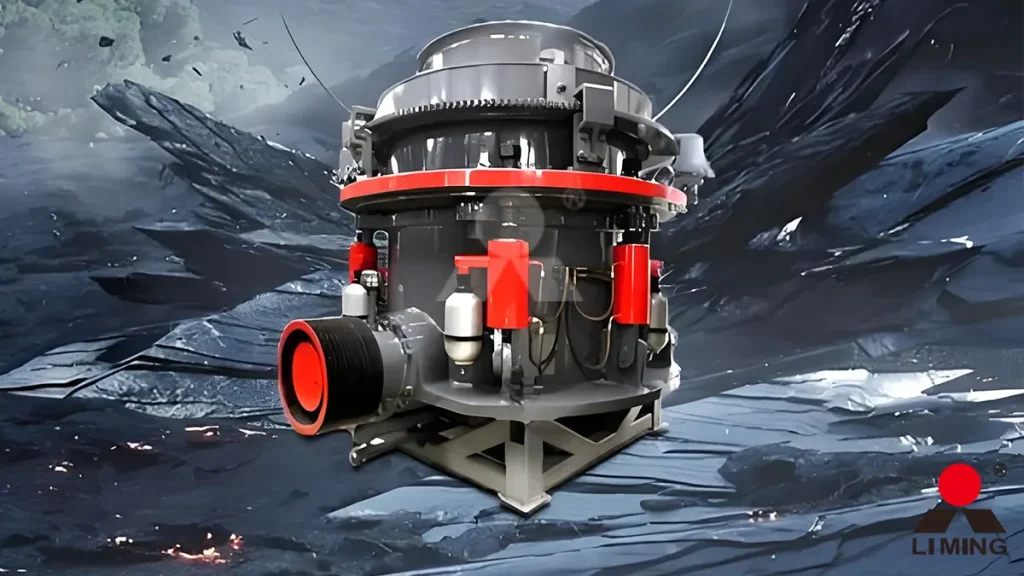
From an engineering standpoint, the decision strictly depends on the material’s Compressive Strength and Abrasion Index. If your rock contains high levels of silica (e.g., Granite, Basalt, River Pebbles, or Quartzite), it is highly abrasive. You must use a Cone Crusher. Cone crushers operate via inter-particle comminution (compression), which naturally withstands highly abrasive forces. Conversely, if you are processing soft to medium-hard rock with low silica (e.g., Limestone or Dolomite), an Impact Crusher (HSI) is the superior choice due to its high reduction ratio.
The Reality of Wear Parts
Let me translate that science into dollars. If you put river pebbles or hard granite into an Impact Crusher, the silica will chew through your thick steel blow bars in a matter of days. I’ve seen quarries go bankrupt simply buying replacement blow bars. However, if you’re crushing soft limestone, the HSI is a money-maker. The blow bars last for weeks, and the machine produces a beautiful, cubical stone that my clients love.
2. Final Product Requirements: Shape and Gradation
Particle Mechanics
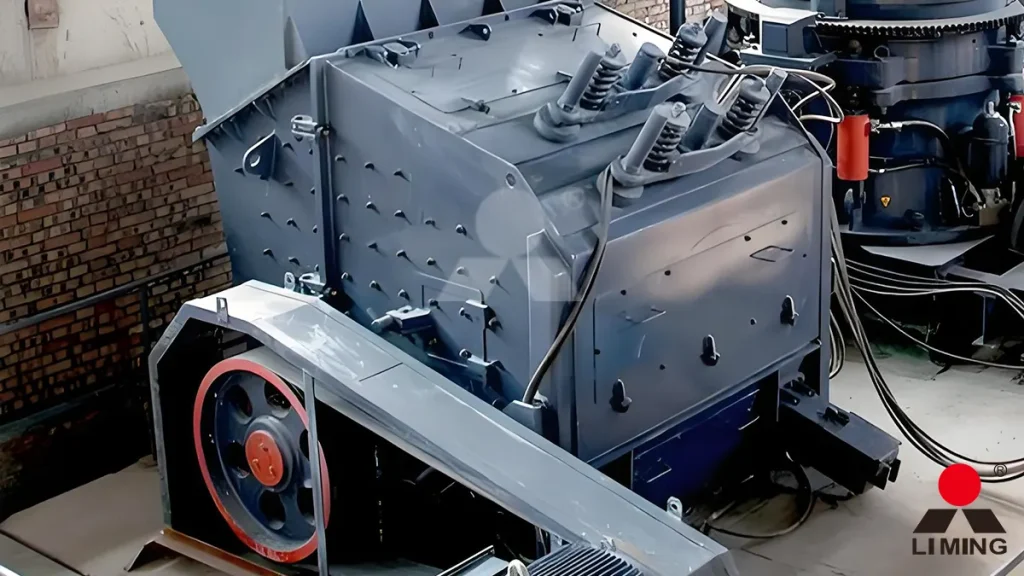
Because Impact Crushers break rock along its natural cleavage lines by smashing it against breaker plates, they consistently yield an excellent cubical shape with very few flaky particles. Cone crushers, due to their squeezing action, tend to produce a higher percentage of elongated and flaky stones. If you use a cone crusher for concrete aggregates, you will almost certainly need a Tertiary Crusher (like a VSI) to reshape the stones.
Selling the Stone
Concrete batching plants are strict. If my aggregate has too many flaky stones, they reject the truck. If I’m running a Cone Crusher, I have to make sure my operators “choke feed” it—meaning keeping the crushing cavity completely full. When rocks crush against other rocks inside a full cone, the shape improves drastically. But for pure shape directly out of the machine, the HSI beats the Cone every time.
Cone Crusher vs. Impact Crusher: The Ultimate Comparison
Here is a direct technical and operational comparison to help you choose the right secondary crusher at a glance:
| Comparison Metric | Cone Crusher (Secondary) | Impact Crusher / HSI (Secondary) |
|---|---|---|
| Ideal Material | Hard, Abrasive (Granite, Basalt, River Stone) | Soft, Non-Abrasive (Limestone, Concrete Recycle) |
| Crushing Principle | Compression / Squeezing | High-Velocity Impact / Cleaving |
| Product Shape | Average (can be flaky if not choke-fed) | Excellent (Highly Cubical) |
| Wear Part Cost (OPEX) | Low (Mantles/Bowl liners last longer) | High (Blow bars wear quickly on hard rock) |
| Initial Cost (CAPEX) | Higher | Lower |
| Fines Production | Produces fewer fines (less waste) | Produces more fines/powder |
Frontline FAQ: Real Questions from Quarry Operators
Q: We are processing River Pebbles. Can we use an Impact Crusher because it is cheaper to buy?
Engineer: Absolutely not. River pebbles have one of the highest silica contents in the world.
Manager: Don’t do it. You might save $20,000 buying the machine, but you will spend $50,000 replacing blow bars in the first three months. Plus, your plant will be shut down constantly for maintenance. You must buy a Cone Crusher for river pebbles.
Q: Our Cone Crusher is jammed with a piece of uncrushable steel (tramp iron). How bad is this?
Manager: If you bought an old-school spring cone crusher, it’s a nightmare. My guys have to spend hours digging it out.
Engineer: This is why we always recommend a Modern Multi-Cylinder Hydraulic Cone Crusher for the secondary stage. It features a hydraulic tramp iron release system. With the push of a button, the hydraulic cylinders lift the upper frame, dropping the iron out of the cavity, and you are back in operation in minutes.
Q: We have a limestone quarry. Why should we choose an HSI over a Cone?
Engineer: Limestone is soft (low compressive strength) and low in silica. An HSI takes advantage of this, offering a massive reduction ratio (sometimes up to 20:1) in a single pass.
Manager: For limestone, the HSI is a dream. You feed it massive chunks, and it spits out perfect, ready-to-sell cubical gravel. You often don’t even need a tertiary stage, which saves you a fortune in electricity and conveyor belts.
Choosing the right secondary crusher isn’t about which machine is “better” in a vacuum; it’s about matching the machine to the DNA of your rock and your business goals. Respect the science of the stone, factor in the maintenance realities of your crew, and your secondary stage will become the most profitable asset in your quarry.

