


The Cost Of Artificial Gravel Production Line For 300tph
Based on recent site audits in abrasive granite circuits across Southeast Asia, the biggest threat to capital payback velocity isn’t the upfront equipment price of the primary jaw, but the hidden wear dragging down the entire system. We constantly see site managers miscalculating the true financial burden of hard rock crushing. They buy undersized impactors for 200MPa basalt and watch their daily running costs explode. The physics don’t care about your production schedule. When setting up a 300 tons per hour facility, the financial viability relies entirely on synchronized mechanical transitions.
Fiscal Reality of High-Volume Primary Extraction
The upfront equipment price means nothing if your primary jaw chokes on 700mm feed.
Evaluate the C6X110 jaw crusher. This unit handles 160-550 tons per hour with a 160 kilowatts motor. The financial drain in primary stages usually stems from improper feed control, causing massive amperage spikes. The sharp scent of ozone from an overworked motor is the first indicator that your initial investment is bleeding out. Look at the toggle plates and eccentric shafts. If the high-capacity secondary cone crusher is starved because the jaw cannot maintain consistent discharge, your expenditure per shift skyrockets.
Stop ignoring the grease points on the primary pitman. A seized bearing here halts the entire operation, instantly destroying your profitability timeline.
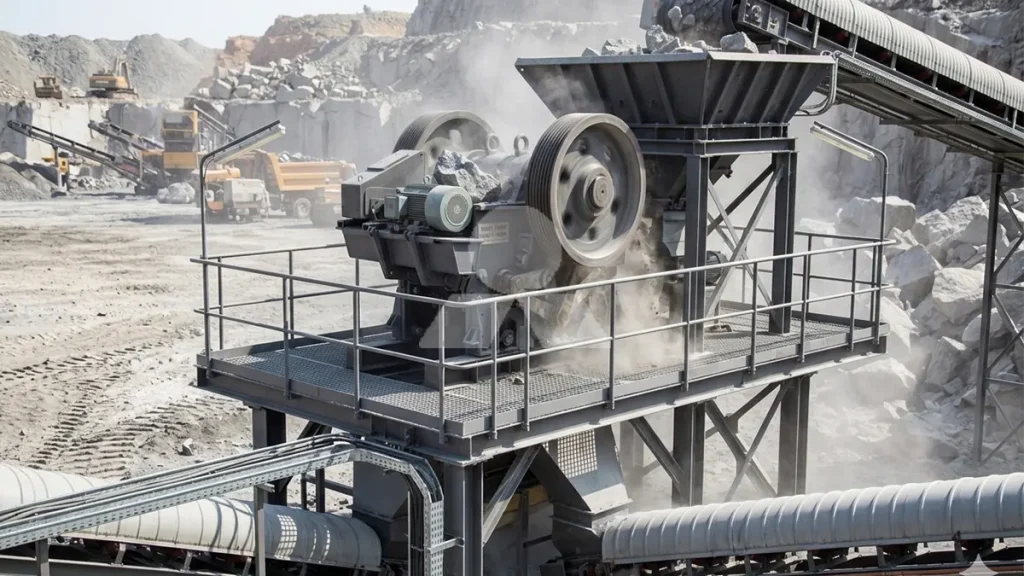
The Blueprint: 300tph Hard Rock Circuit Architecture
To handle the abrasive silica of river gravel at 300 tons per hour, we have engineered the following circuit to maximize production-to-cost ratio.
| Process Stage | Recommended Model | Capacity (tons per hour) | Power (kilowatts) | Max Feed (millimeters) |
|---|---|---|---|---|
| Primary Feeding | TSW1345 | 250-450 | 22 | 700 |
| Primary Crushing | C6X110 | 160-550 | 160 | 720 |
| Secondary Crushing | HPT300 | 110-440 | 250 | 230 |
| Sand Making | VSI6X1040 | 264-515 | 200~2 | 40 |
| Grading & Screening | S5X2160-3 | 85-700 | 30 | 200 |
Combating Silica Abrasion in the Secondary Cavity
Relying on impactors for high-silica stone guarantees massive daily running costs; switch to multi-cylinder cone technology.
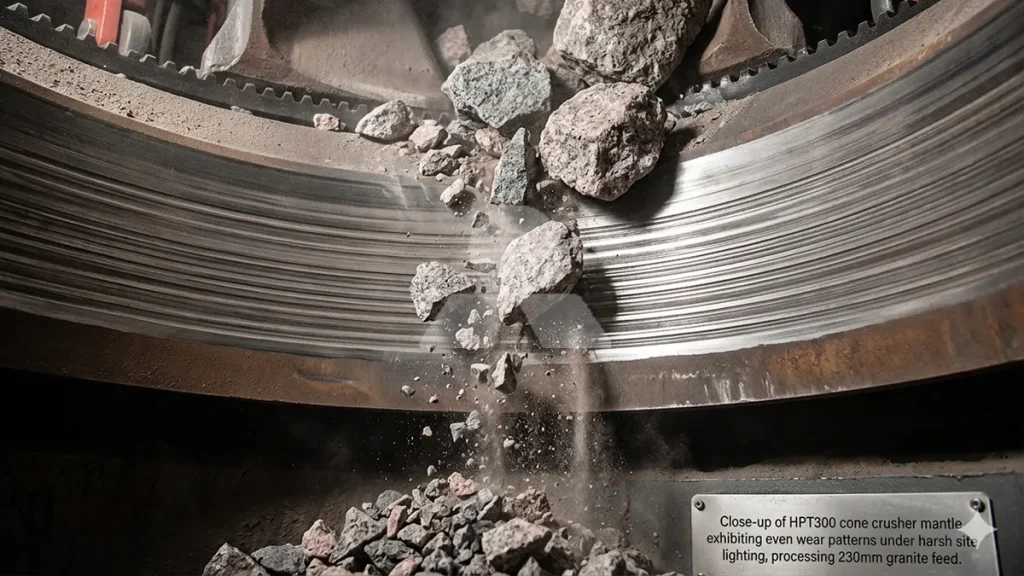
The HPT300 requires a 250 kilowatts power source to maintain crushing force against rigid basalt. When you hear the high-frequency metallic ping of granite hitting a manganese liner, you witness pure kinetic transfer. If the CSS (Closed Side Setting) is misaligned, the mantle and concave endure uneven stress, forcing the hydraulic cylinders into continuous tramp release. This invisible drag adds tens of thousands of dollars to your monthly expenditure.
Calibrate the feed rate to exactly match the 110-440 tons per hour operational flexibility of the HPT300. A choked cavity ensures rock-on-rock attrition, drastically lowering the wear on steel components. Handle the multi-stage granite crushing circuit with precision, and your asset amortization cycle shrinks dramatically.
Final Shaping and Rotor Survival
A cheap rotor is just scrap metal waiting to happen when spinning at high RPMs against 40mm river stone.
Tap into the VSI6X1040 for tertiary reduction. Pushing 264-515 tons per hour through an impeller demands twin 200 kilowatts motors. Wet fines turn into a sticky industrial paste that bridges the feed hopper during monsoons, causing violent imbalances. The vibration felt through an operator’s steel-toed boots on the platform warns of material buildup inside the crushing chamber. Use high-chrome blow bars to combat the intense friction.
Sync the VSI discharge directly with the S5X2160-3 vibrating screen. The 30 kilowatts drive handles 85-700 tons per hour effortlessly, keeping the grading precise and eliminating recirculating loads that kill efficiency.
160kW Peak Load Benchmarks: Synchronizing C6X110 with Abrasive Granite
- C6X110 Operational Range: 160-550 tons per hour
- HPT300 Motor Load: 250 kilowatts
- TSW1345 Intake Limit: 700 millimeters
- VSI6X1040 Throughput: 264-515 tons per hour
- S5X2160-3 Grading Capacity: 85-700 tons per hour
Technical Index: LH-THE_COST_OF_ARTIFICIAL_GRAVEL_PRODUCTION_LINE-April/2026-Ref-#48192
Efficiency Evangelist’s Log: Calibrating VSI6X1040 Amperage Spikes in Monsoon Season
- Why does the VSI6X1040 twin 200kW motor system draw excessive current only during early morning shifts?
- The sticky industrial paste formed by overnight condensation on 40mm aggregate creates severe rotor imbalance. You must pre-screen fines aggressively using the S5X2160-3 before material hits the impeller.
- How does the HPT300 tramp release frequency compare to older spring cone designs?
- Look at the legacy PYB900 units which required manual clearing; the modern hydraulic system purges uncrushable steel instantly at 250 kilowatts, dropping maintenance stops by 80%.
- Don’t ignore the grease points on the C6X110, but how often should we lubricate under 200MPa loads?
- The high-stress toggle plate and pitman geometry operating at 160-550 tons per hour mandate strict 8-hour shift inspections. Failure to maintain bearing temperature below 60 Celsius guarantees frame cracking.
- Based on 500 hours of site data, what is the safest CSS margin for the HPT300?
- Our tests show that locking the discharge at 22 millimeters optimizes the 250 kilowatts power draw while maintaining maximum rock-on-rock attrition in the cavity.
Securing Fiscal Efficiency in High-Volume Circuits
When you force a VSI6X1040 to process 515 tons per hour of wet, unclassified feed, the resulting rotor imbalance will shatter the main bearings next month. Optimize the upstream C6X110 jaw and HPT300 cone to deliver clean, graded 40mm material, forcing a massive reduction in your capital payback velocity.
Stop Guessing on Rotor Wear Cycles
“Are you losing margin to abrasive silica? Send us your feed size.” — From the Desk of your Production Strategist

